
What Is the Concept of Continuous Quality Improvement?
“What is the concept of continuous quality improvement?” is one of the most common questions of quality management. Continuous quality improvement is one of the fundamentals of quality management. In this article, we will be discussing that in detail.
Goal setting is a common practice in business, but despite our best intentions, many organizations lose focus over time. The same can happen with your day-to-day operation. The most efficient businesses understand that increased operational efficiency and cost savings can only be achieved through ongoing efforts to identify and eliminate waste in all of its forms. What is really needed is a focus on continuous improvement as a part of your maturity marathon.
The journey should start with a root-cause analysis
The process of focusing on waste elimination is a fundamental element in building a culture of quality. This is also known as MUDA in Lean Production practices. However, when looking at inefficiencies in your process, it can be very overwhelming to determine where to start. It is far too easy to “fix the squeaky wheel” but without addressing the root cause of why it is squeaking, you are destined to have to deal with the problem again. And what if many wheels are squeaking?
Rely on Data and Reports
The best place to start is to look at what your data is telling you. Compile the sources of information on complaints, and deviations. Then yield reports to gather some insight into which areas require your attention first. There are many approaches but looking at low-effort, high-impact fixes is where to start. A simple Pareto of the deviations by type can quickly identify the top 3 issues. This is the low-hanging fruit that when addressed can remove the noise in your process and allow for quick wins. These changes are often not expensive or time-consuming but rather just require rethinking on how to do things differently. And the impact on your costs can be incredibly significant.
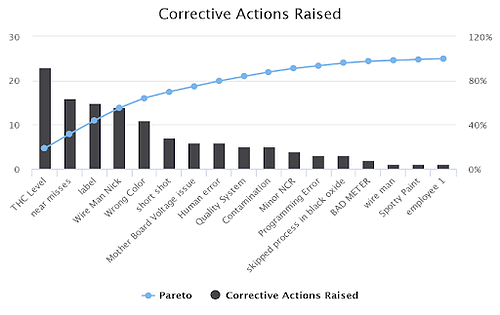
For example, perhaps you consistently have labeling errors on the line resulting in increased inspection, rework, and even destruction. The costs associated with lost time and product add up quickly.
Performing a root cause analysis may determine that too often production materials are left behind from the previous day. A simple post-operative checklist can ensure that you clear the production lines properly, removing all production materials when you finish the day. This paired with a simple pre-operative start-up list can ensure the right materials are brought to the line for the day. Now you have avoided the cost of poor quality from the error, eliminating the need for rework and man hours on inspection.
By removing the low-hanging fruit, you create operational efficiencies that present the time needed to address the bigger issues that may require more in-depth analysis or intervention. Repeat this process for other sources of issues and you reduce the overall cost of your process, increase yield and positively impact profitability.
But “what is the concept of continuous quality improvement?”
As the quote famously attributed to Aristotle says “We are what we repeatedly do. Excellence, then, is not an act but a habit.” By embedding the practice of identifying and addressing small issues as they arise within the organization, you raise everyone’s awareness and ownership of the quality of the process and the products. A company with a culture of identifying and fixing inefficiencies as they are identified is on the way to building a strong culture of quality.
The author of the article is Shannon McCoy, Founder of Connla Group Inc.


.png)
Non Conformance Management Software: Track & Prevent NCRs

.png)
Join Our Newsletter



