The 7 Quality Management Principles of ISO 9001 Explained
The 7 quality management principles are customer focus, leadership, engagement of people, process approach, improvement, evidence-based decision making and relationship management. They are defined by ISO in ISO 9000, the fundamentals and vocabulary standard, and they are the foundation that ISO 9001 and many other management system standards are built on.
This guide explains each of the 7 principles of ISO 9001 with an example, shows where each one appears in the standard, and covers how to put them into practice.
Looking for a free ISO 9001 audit checklist? Download it from our resources section.
What are the quality management principles?
The quality management principles are a set of fundamental beliefs about what makes a quality management system effective. They aren't requirements you get audited against. Instead, the requirements of ISO 9001 are written to put these principles into practice, so understanding them makes the standard much easier to apply.
Earlier versions listed 8 principles. In the 2015 revision, ISO combined "system approach to management" into the process approach, leaving the 7 principles used today.
The 7 principles at a glance
| Principle | In one line | Where it shows up in ISO 9001 |
|---|---|---|
| 1. Customer focus | Meet customer requirements and aim to exceed expectations | 5.1.2, 8.2, 9.1.2 |
| 2. Leadership | Leaders set direction and create the conditions for quality | 5.1, 5.2, 5.3 |
| 3. Engagement of people | Competent, empowered people at every level | 7.1.2, 7.2, 7.3 |
| 4. Process approach | Manage activities as connected processes | 4.4 |
| 5. Improvement | Keep getting better, permanently | 10 |
| 6. Evidence-based decision making | Decide using data and analysis | 9.1.3, 9.3 |
| 7. Relationship management | Manage relationships with suppliers and other interested parties | 4.2, 8.4 |
1. Customer focus
The first quality management principle is that the main purpose of quality management is to meet customer requirements and to aim to exceed customer expectations. That means understanding what customers need today and what they will need next, and measuring whether you are delivering it.

Example: A furniture maker reviews complaints, returns and customer surveys every quarter, then changes its product line and packaging based on what it finds.
In ISO 9001: top management's commitment to customer focus (5.1.2), determining requirements for products and services (8.2) and monitoring customer satisfaction (9.1.2).
In practice: track complaints and customer feedback in one place, look for trends, and feed them into corrective actions and management review.
2. Leadership
Leaders at all levels set a clear direction and create the conditions in which people can achieve the organization's quality objectives. A quality system without visible leadership support rarely survives the first busy quarter.
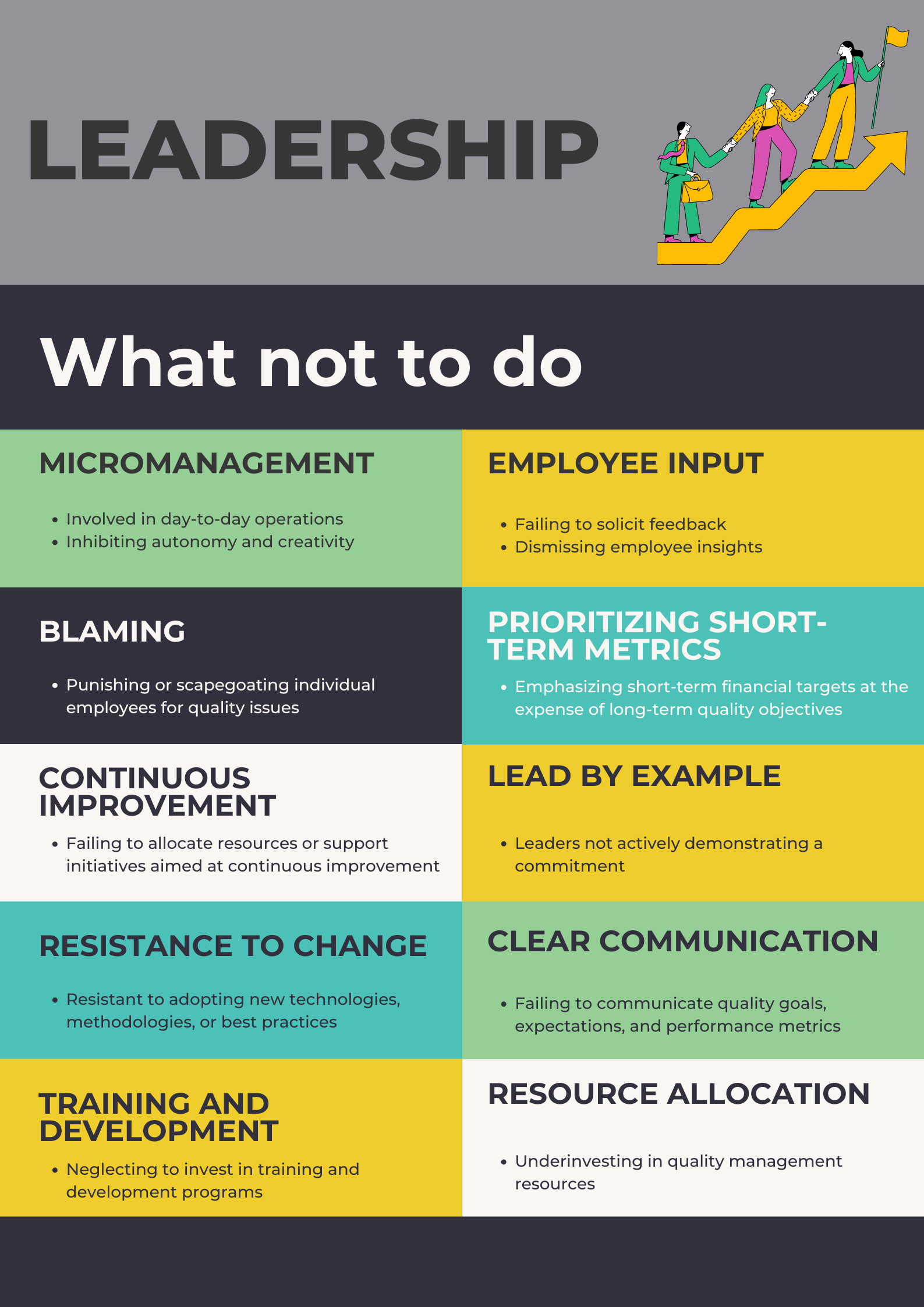
Example: A plant manager reviews quality metrics in every weekly operations meeting, funds the training the quality team asks for, and personally takes part in management review.
In ISO 9001: leadership and commitment (5.1), the quality policy (5.2) and organizational roles, responsibilities and authorities (5.3).
In practice: give leaders a live view of quality objectives, open actions and audit results so quality is part of how the business is run. Read more about the importance of leadership in quality management.
3. Engagement of people
Competent, empowered and engaged people at every level are essential to delivering value. This principle is about making sure everyone knows how their work affects quality and has the skills and authority to do it well.
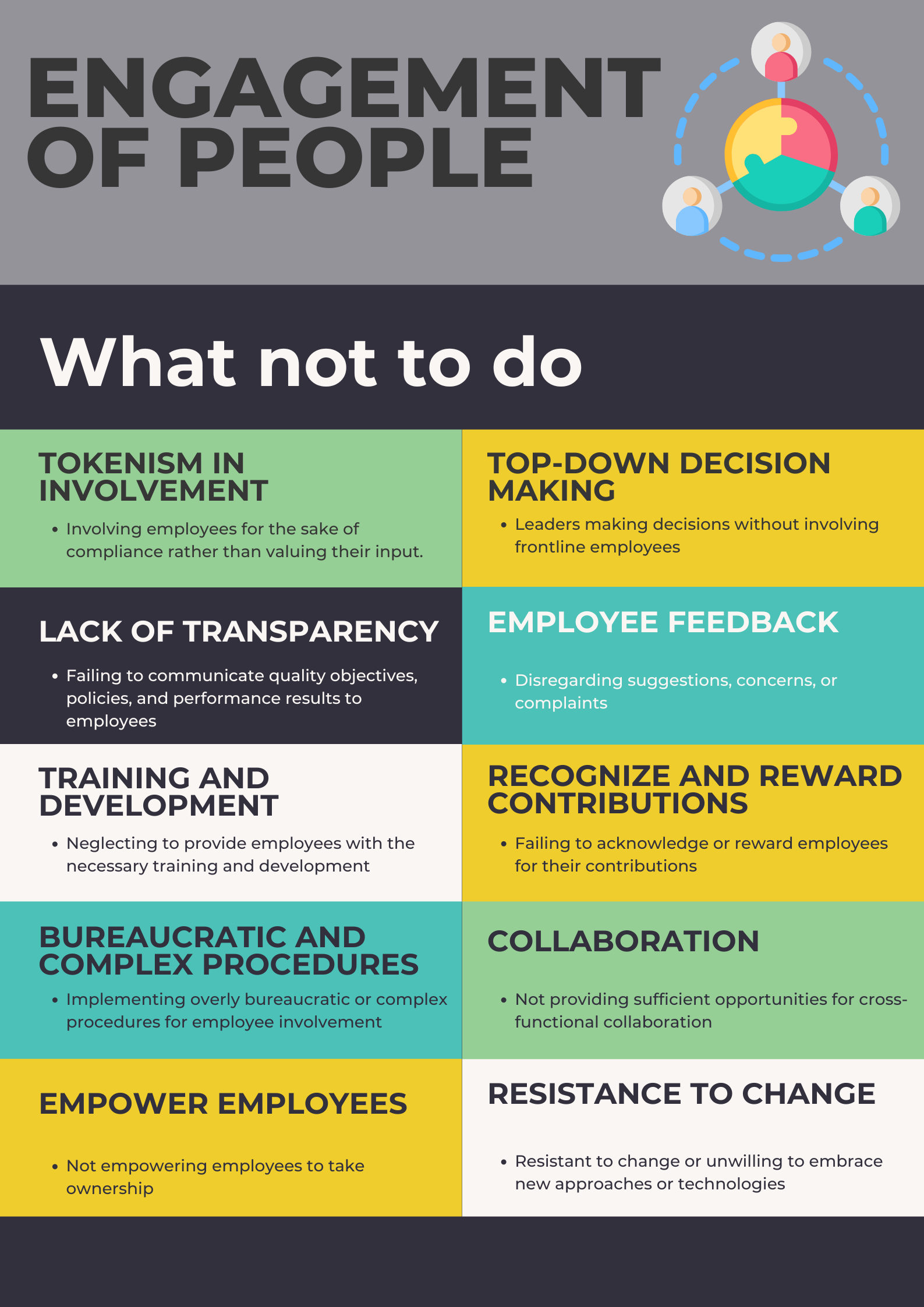
Example: A manufacturer sets up cross-functional improvement teams with members from production, engineering and purchasing, and tracks each person's training against the procedures they use.
In ISO 9001: people (7.1.2), competence (7.2) and awareness (7.3).
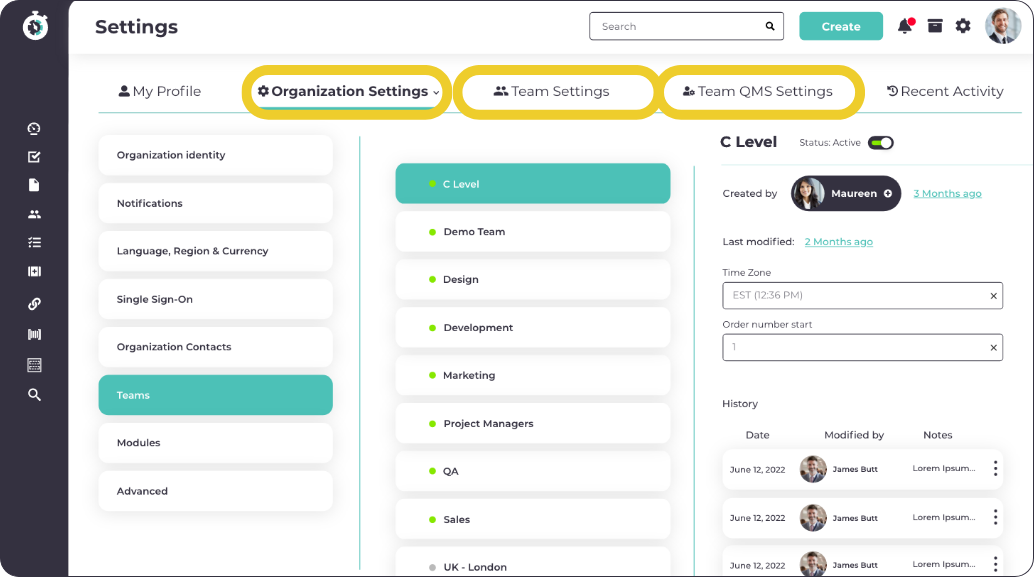
In practice: link training requirements to roles and procedures so that when a procedure changes, the right people are retrained. The Isolocity platform lets you assign training to employee groups and see gaps at a glance.

4. Process approach
Results are achieved more consistently when activities are understood and managed as interrelated processes that work together as a system. Instead of managing departments in isolation, the process approach looks at how work flows across them, with defined inputs, outputs, owners and measures.
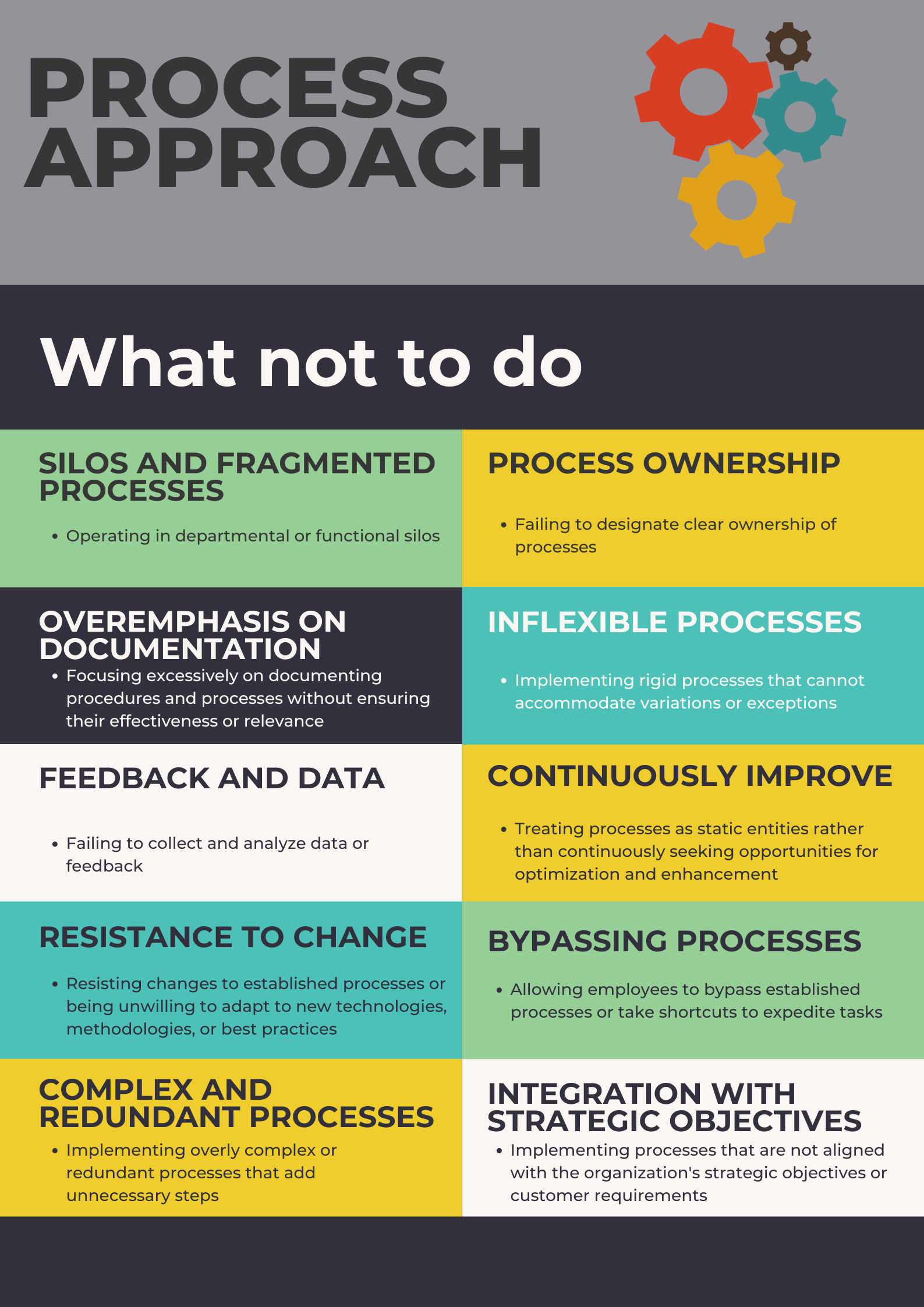
Example: An automotive supplier maps its order-to-delivery process, defines who owns each step, and measures on-time delivery and first-pass yield at the handoffs where problems used to appear.
In ISO 9001: the quality management system and its processes (4.4), which asks organizations to determine their processes, how they interact, and how they are controlled and measured.
In practice: document key processes under document control and review them using the Plan-Do-Check-Act cycle.
5. Improvement
Successful organizations have an ongoing focus on improvement. This principle treats improvement as permanent work, not a project with an end date.
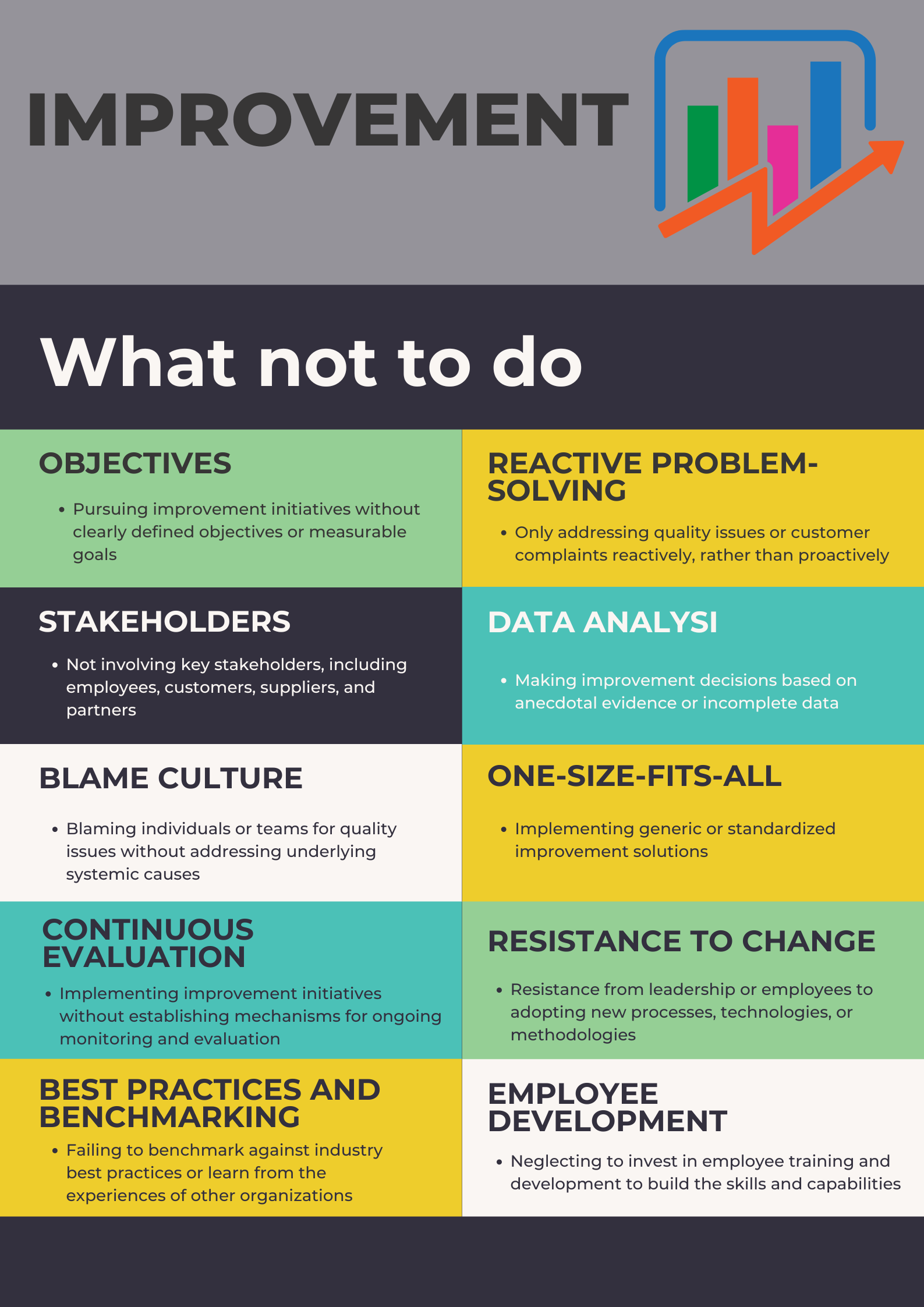
Example: A company sees the same defect in customer complaints three months in a row. It opens a corrective action, finds the root cause in a supplier's material, changes the incoming inspection plan and checks that the complaints stop.
In ISO 9001: clause 10, which covers nonconformity and corrective action (10.2) and continual improvement (10.3).
In practice: run every significant problem through CAPA and track whether the fixes actually worked.
6. Evidence-based decision making
Decisions based on the analysis and evaluation of data and information are more likely to produce the desired results. That doesn't mean ignoring experience; it means checking it against facts.
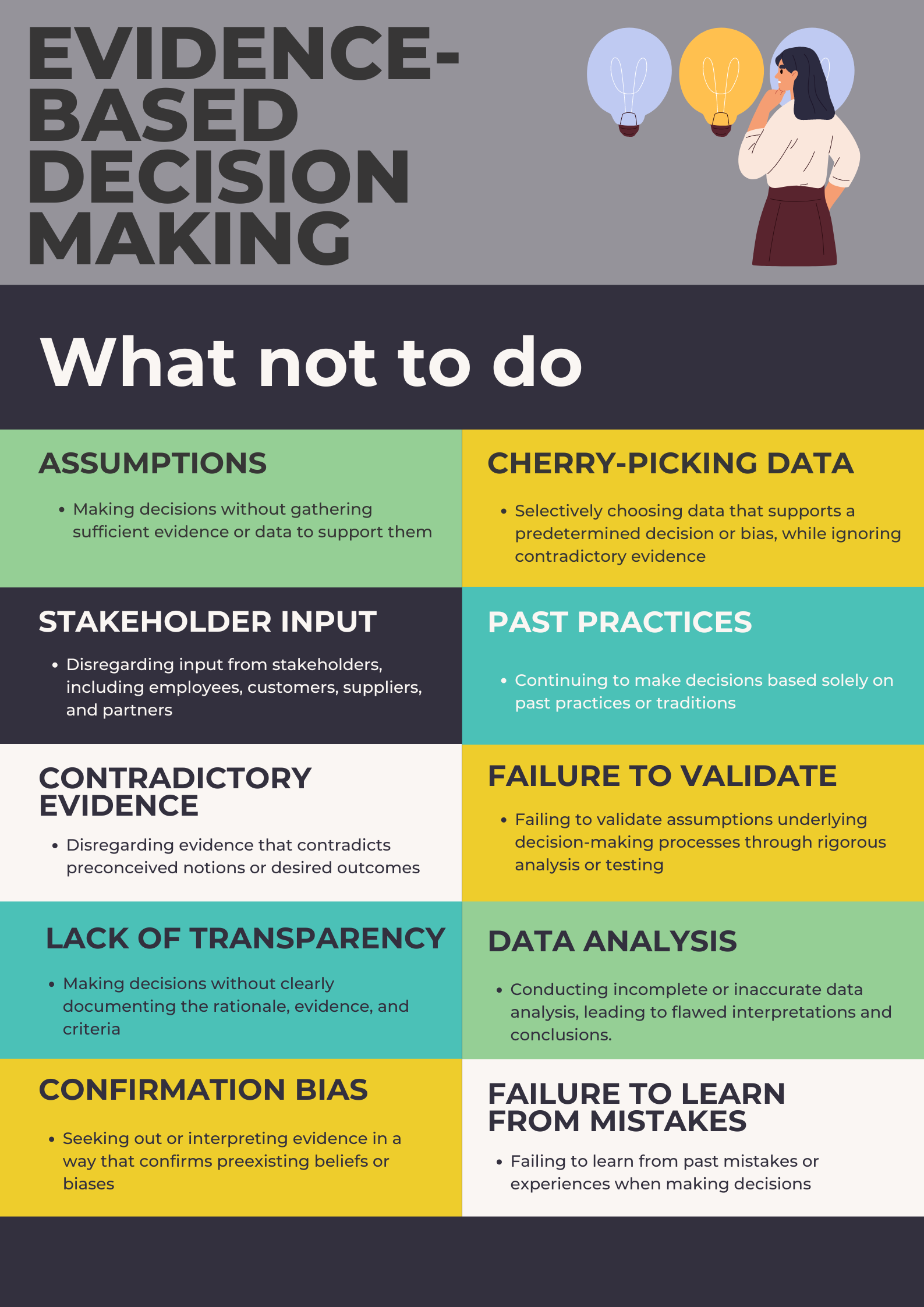
Example: Before replacing a machine, a manufacturer reviews six months of downtime, scrap and maintenance records and finds that a change in maintenance frequency fixes most of the problem.
In ISO 9001: analysis and evaluation (9.1.3) and management review (9.3).
In practice: keep quality data in one system so trends in nonconformances, complaints and audit findings are visible without rebuilding a spreadsheet each time.
7. Relationship management
For sustained success, organizations manage their relationships with interested parties, such as suppliers, customers, employees and regulators. Suppliers matter most for quality, because the quality of what you buy limits the quality of what you make.
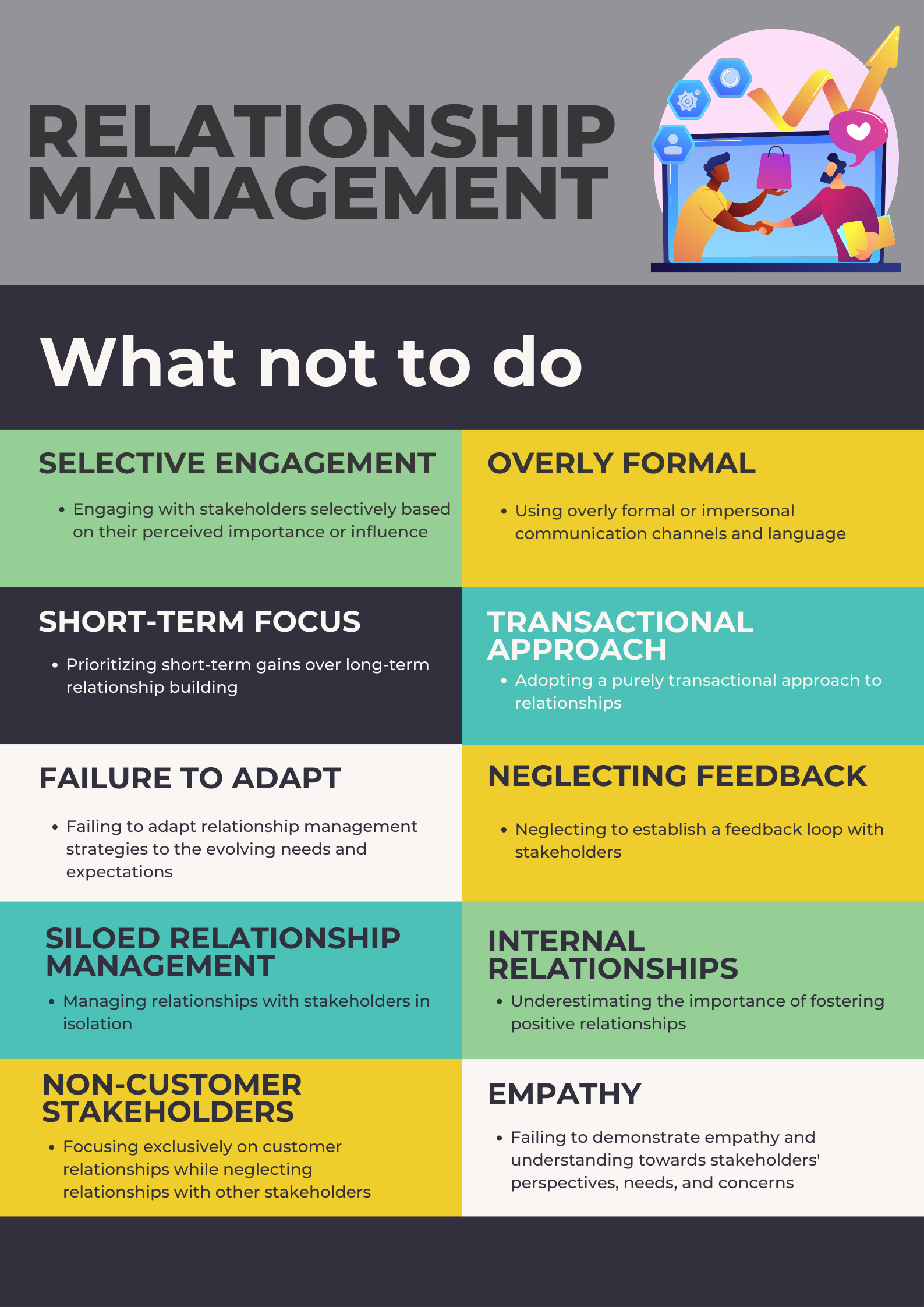
Example: A manufacturer shares its quality expectations with key suppliers, reviews their performance quarterly, and works with them on corrective actions instead of simply switching suppliers after every problem.
In ISO 9001: understanding the needs and expectations of interested parties (4.2) and control of externally provided processes, products and services (8.4). See our guide to ISO 9001 section 8.4.
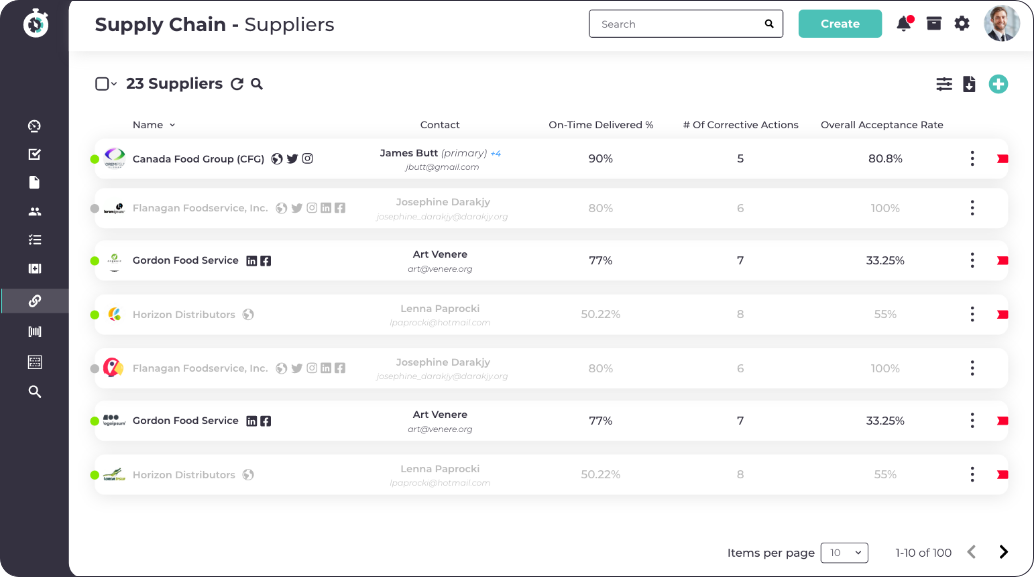
In practice: keep an approved supplier list, track supplier performance and manage supplier corrective actions in the same system as the rest of your quality data.
How to put the 7 principles into practice
- Start with customers and leadership. Agree on what customers need and have leadership set measurable quality objectives.
- Map your key processes. Define owners, inputs, outputs and measures for the processes that most affect customers.
- Train and involve people. Link training to procedures and give teams a way to raise and solve problems.
- Measure and review. Track a small set of indicators and review them in management review.
- Close the loop. Use corrective actions to fix causes, and work with suppliers on their part.
Quality management principles FAQs
What are the 7 quality management principles?
Customer focus, leadership, engagement of people, process approach, improvement, evidence-based decision making and relationship management.
Are the quality management principles requirements of ISO 9001?
No. They aren't auditable requirements on their own, but ISO 9001's requirements are built on them, so an organization that meets ISO 9001 is applying all 7.
Why were there 8 principles before?
Earlier versions included "system approach to management" as a separate principle. In the 2015 revision it was merged into the process approach, giving 7 principles.
Are the quality management principles the same as the principles of TQM?
They overlap a lot, since both come from the same quality movement, but they aren't identical. See our guides to total quality management and the 8 principles of TQM.
Conclusion
The 7 quality management principles explain why ISO 9001 asks for what it does. Customer focus and leadership set the direction, engaged people and well-managed processes deliver the work, and improvement, evidence and good relationships keep the system getting better.
The Isolocity platform connects documents, training, CAPA and supplier management so each principle is supported by the same system. Book a demo to see it.
Related articles



What Is CAPA? Corrective and Preventive Action Explained