
What Is ISO 9001? An Exhaustive Guide
We've been diving deep into ISO 9001 in our blogs lately. If you head to our ISO 9001 category or simply search for ISO 9001-related articles on our website, you'll find a treasure trove of materials. Our ISO 9001 audit checklist has been particularly popular.
But we get it – sifting through all those resources can be a bit overwhelming if you're looking for a comprehensive view of ISO 9001. That's why we're putting together a one-stop-shop for all your ISO 9001 inquiries. This page will be like a hub, connecting you to everything you need to know about ISO 9001, whether it's the latest updates, timeless principles, or handy tools like PDFs and spreadsheets. Some topics will be covered right here, while for others, we'll point you to relevant internal pages. Let's make navigating ISO 9001 a breeze!
I have just started my journey with ISO 9001
1. What is ISO?
The International Organization for Standardization (ISO) is a non-governmental organization that develops international standards with input from national standards organizations of member countries. Established on February 23, 1947, ISO has published over 25,000 standards covering various areas of technology and manufacturing. It operates through more than 800 technical committees and subcommittees responsible for standards development.
2. What is ISO 9001?
ISO 9001 is a globally recognized standard for Quality Management Systems (QMS), published by ISO. It helps organizations ensure they consistently deliver products and services that meet customer requirements and enhance satisfaction. ISO 9001 certification is highly regarded as the gold standard for product quality, which is why manufacturing companies strive to attain it.
3. Why is ISO 9001 important?
The benefits of ISO 9001 are multifold. As we move ahead, you will learn that there are multiple clauses under ISO 9001 and each clause helps achieve a specific objective. So even though the overall objective is to achieve better product quality, there are many underlying benefits too.
The main benefits of ISO 9001 are:
- Improves quality management processes
- Enhances customer satisfaction
- Reduces risks
- Increases efficiency
- Demonstrates commitment to quality
- Provides a competitive edge in the marketplace
4. Mention all the ISO 9001 versions chronologically
The different versions of ISO 9001 are as follows:
- ISO 9001:1987: The first version, focused on quality assurance in design, production, and installation.
- ISO 9001:1994: Introduced process-based systems and the idea of continuous improvement for customers.
- ISO 9001:2000: A major overhaul! It switched from rules to processes, putting customer happiness front and centre.
- ISO 9001:2008: Minor tweaks to make expectations clearer and the introduction of process-based auditing.
- ISO 9001:2015: The latest and greatest. Now it's all about risk-based thinking, focusing on processes, risk mitigation, and playing well with other ISO standards.
5. Who can benefit from ISO 9001 certification?
Most organizations that want to improve their quality management system can go for ISO 9001 certification. For quality management software like Isolocity, it makes more sense to keep the system compliant with ISO 9001 requirements because our objective is to help our clients achieve ISO 9001 certification.
Here are three industries that should not ignore the benefits of ISO 9001 certification:
Industries
- Manufacturing: Manufacturing companies produce tangible goods and naturally prioritize enhancing product quality, as it directly impacts core business operations.
- Healthcare: In healthcare industries such as biotechnology and pharmaceuticals, quality can be a matter of life and death. ISO 9001 certification is paramount for these companies.
- Food: While technically manufacturing, food quality issues affect millions. ISO 9001 should serve as the fundamental foundation for their QMS alongside certifications like HACCP and SQF.
Size
Regardless of size, ISO 9001 holds relevance for all organizations. The absence of compliance can lead to increased penalties. While a larger organization might withstand a million-dollar penalty, a smaller one could struggle with even a $100K fine. Focusing on customers and product quality mitigates the fear of penalties through the right checks and balances.
Geography
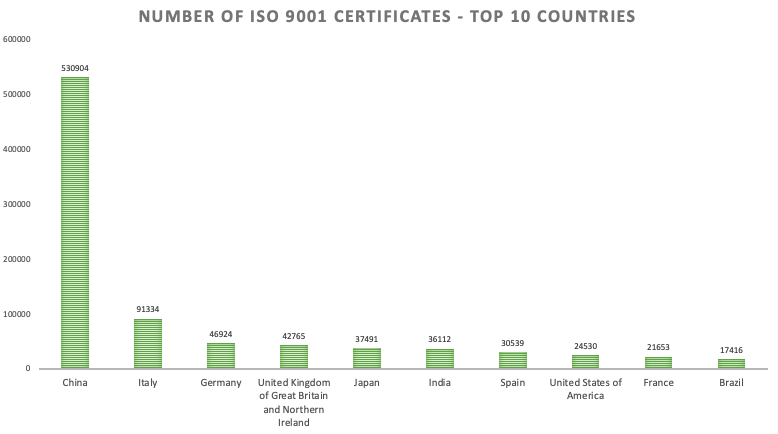
This can be best answered with a graph. Since it is a global standard, it is valid for every country.
Countries with the most valid ISO 9001 certificates as of 2022
Data source: Iso.org
6. What are the steps involved in implementing ISO 9001?
It can be elaborated in 7 steps:
- Understanding the Standard: Get familiar with ISO 9001 and what it requires.
- Implementing a QMS: Set up processes, procedures, and documentation to meet requirements.
- Internal Audits: Check your compliance and find areas to improve.
- Management Review: Top management reviews the QMS to ensure it is working well.
- Certification Audit: An external auditor checks if your QMS meets ISO 9001 standards.
- Certification Decision: The certification body decides whether to grant certification.
- Surveillance Audits: Keep up with periodic audits to maintain your status.
While ISO 9001 doesn't mandate software, opting not to use it can cause months of stress. Without it, managing audit trails and centralized information becomes arduous. This centralized approach is the linchpin to achieving ISO 9001 certification.
7. What are the key principles of ISO 9001?
We've covered the 7 key principles in a dedicated blog post. The 7 principles are:
- Customer Focus
- Leadership
- Engagement of People
- Process Approach
- Improvement
- Evidence-Based Decision Making
- Relationship Management
Explore our blog titled "What are the 7 principles of ISO 9001?" for a comprehensive understanding.
8. What are the main components of ISO 9001?
- Quality Policy: The mission statement for quality.
- Quality Objectives: Goals set to live up to the quality policy.
- Quality Manual: The playbook for handling quality.
- Documented Procedures: Step-by-step guides for the QMS.
- Records: Proof that the organization is doing what it is supposed to do.
- Process Approach: Strategy for managing tasks to achieve results.
- Continual Improvement: Ongoing effort to make things better.
9. What are the clauses and subclauses of ISO 9001?
Here are the ISO 9001:2015 clauses summarized:
- Clause 4: Context of the Organization
- Clause 5: Leadership
- Clause 6: Planning
- Clause 7: Support
- Clause 8: Operation
- Clause 9: Performance Evaluation
- Clause 10: Improvement
10. Why start at Clause 4?
ISO 9001:2015 kicks off from Clause 4 because the first three clauses are the warm-up act, defining the scope and explaining terms. Clause 4 is where the real action begins as organizations dive into their internal and external context. Think of it as the opening act that sets the tone for the performance.
11. Top 10 questions asked during an ISO 9001 audit
Internal and external audits are crucial. We've created a PDF focusing on the top 10 questions commonly encountered. Explore it here: Top 10 questions asked during an ISO 9001 audit.
I have experience with ISO 9001
We have been in the quality management industry for two decades. As an ISO 9001 compliant company, we are well versed in all avenues. We will be sharing materials like our audit checklist, a CAPA SOP, and a 2024 QMS guide below.
ISO 9001 Audit checklist
This comprehensive ISO 9001 Audit checklist serves as your guide for conducting internal audits. This dynamic spreadsheet template includes formulas, allowing you to update cells with your specific audit questions. You can also read our guide: "How to use our free ISO 9001 audit checklist."
CAPA SOP
If you've been immersed in quality management, you've likely encountered Corrective and Preventive Actions (CAPA). Having an extra resource never hurts. We offer a CAPA Standard Operating Procedure template in Word format for easy customization.
ISO 9001:2015 QMS Scope of work template
To fully grasp the essence of ISO 9001:2015, it's essential to have a quality management system scope of work document. This foundational blueprint provides a clear understanding of objectives and functionalities. It's available in PDF and Word formats.
2024 QMS Guide PDF
If you want to understand future trends, check out our 2024 QMS guide. It focuses on three validated aspects: Automation, Sustainability, and Remote Quality Auditing.
ISO 9001 and Quality Management Software Mapping
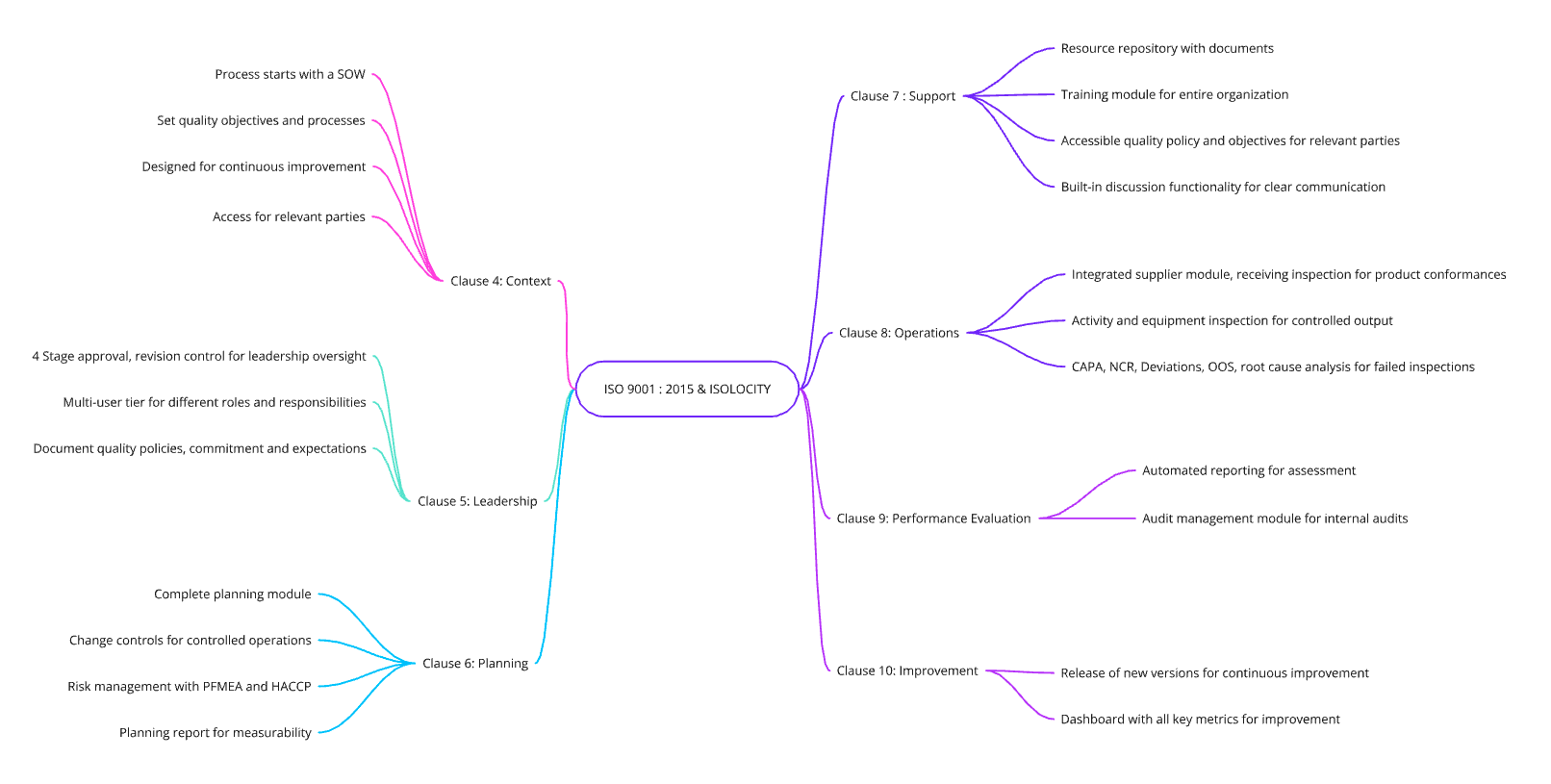
In case you want a direct ISO 9001 clause-by-clause mapping with a QMS's features, this mindmap illustrates how clauses link to features in an ISO-9001 compliant QMS like Isolocity.
Frequently asked questions
Q1: How can we optimize our supplier management processes?
A1: Supplier requirements per ISO 9001 include QMS documentation (Clause 4), product conformance (Clause 8.2), and performance monitoring (Clause 8.4). We strongly recommend a supplier management system to handle these steps efficiently. Isolocity's built-in system automates reminders for certification expiries and manages KPIs like on-time delivery.
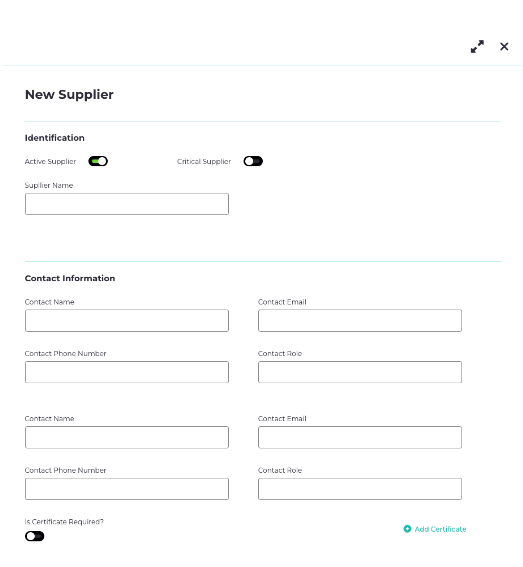
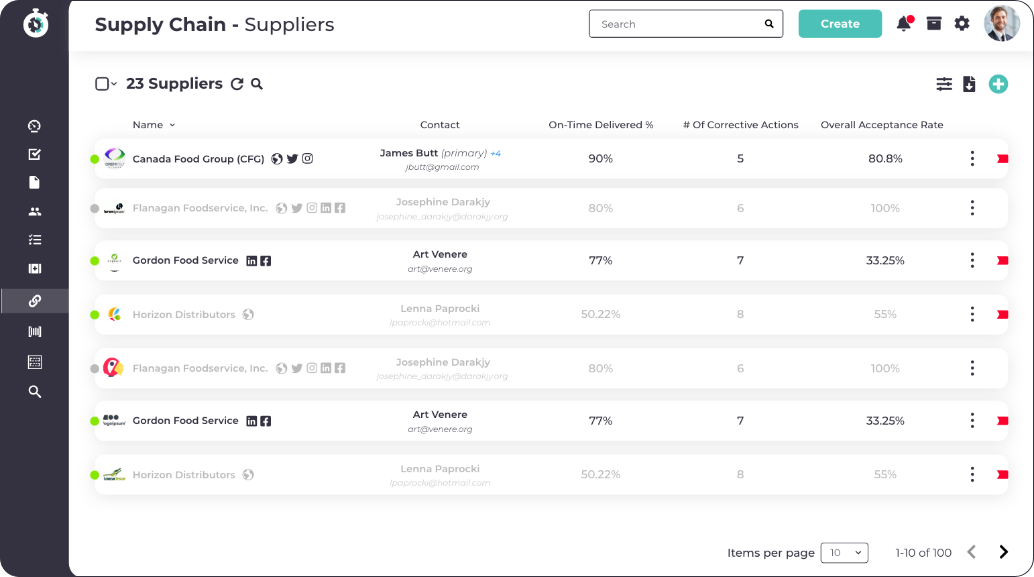
Linking each product to its respective supplier ensures that issue resolution is immediate. Read our in-depth blog: "ISO 9001 section 8.4 – everything you need to know."

Q2: What KPIs should we use to evaluate our QMS?
A2: Lead measures: Cost of Quality, open corrective action rates, and outstanding training or audits. Lag measures: Customer satisfaction index (CSI) and regulatory notices or fines.
Q3: What are emerging trends in ISO 9001?
A3: To proactively adapt, keep an eye on the ISO website or use tools like Visualping for automated alerts. We also recommend regular gap analysis to identify alignment areas for upcoming revisions. Furthermore, technology adoption such as AI and software integration with platforms like SharePoint is crucial to minimizing manual data handling.
Q4: ISO 17025 vs. ISO 9001 – how are they different?
A4: ISO 9001 is for overall quality management, while ISO 17025 is specifically for testing and calibration laboratories. Check out our comparison blog: "ISO 17025 vs ISO 9001 – how are they different?"
Q5: How to start a career as an ISO 9001 consultant?
A5: If you're aspiring to become an ISO 9001 consultant or auditor, read our tailored blog: "How to start a career as an ISO 9001 consultant?"
Some popular ISO 9001 books
Related articles
- ISO 9001 Audit Checklist
- How to start a career as an ISO 9001 consultant
- ISO 9001 section 8.4 – everything you need to know
- ISO 17025 vs ISO 9001 – how are they different?
- What are the 7 principles of ISO 9001?
Ready to streamline your journey? Book a demo with us today to see how we can automate your ISO 9001 compliance.



Beyond the Checkmarks: How Isolocity Conquered ISO 27001:2022 (And What It Means for Your Operations)

Join Our Newsletter



